
When My Body Goes into Overdrive: Living with Post-Medical Alarms and Crohn’s Urgency
If you were to pass me on the sidewalk while I’m walking my dog, Maple, you would definitely hear me before you saw me. I don’t just get a little winded; I gasp for air so heavily that it’s honestly embarrassing. My chest heaves, and if I look down at my Garmin watch, my heart rate is absolutely soaring. It spikes into ranges that look like I’m sprinting a marathon, when really, I’m just walking up a neighbourhood hill.
When I'm out in public like that, I get so self-conscious. I constantly wonder if people are judging how out of shape I look, or staring at the sheer effort it takes for me to get up a slight incline. But inside my head, the dialogue is a lot more dramatic. My brain instantly goes to the worst-case scenario. As my heart pounds, the thoughts start racing: Oh my God, I am going to die right here on the sidewalk. What is going to happen to Maple? Who is going to find her? Who is going to call the ambulance?
Passersby just see a woman walking her dog. They don't know the history behind my lungs and my nervous system. They don't know that I survived multiple massive bilateral pulmonary embolisms. Even though the crisis is over, my body remembers exactly what it felt like to be in danger. When my heart rate spikes and I can't catch my breath, my brain doesn't just think oh, we're walking up a hill. It thinks emergency—we are trapping blood clots again and we can't breathe. For a long time, that feeling would completely paralyze me with panic. But learning how to pay attention to my body and work through these symptoms has changed things.
When that alarm goes off on a hill, my first instinct is to panic. The fear feels so real in the moment, even though it's just an echo of what happened to me in the past. Now, I force myself to pause. I stop walking. I stand still on the sidewalk, hold Maple’s leash, and just let myself rest. At first, those internal alarm bells keep ringing loud and clear. My heart is still hammering against my ribs. But as I stay still, I just notice the sensations without fighting them or trying to run away from them.
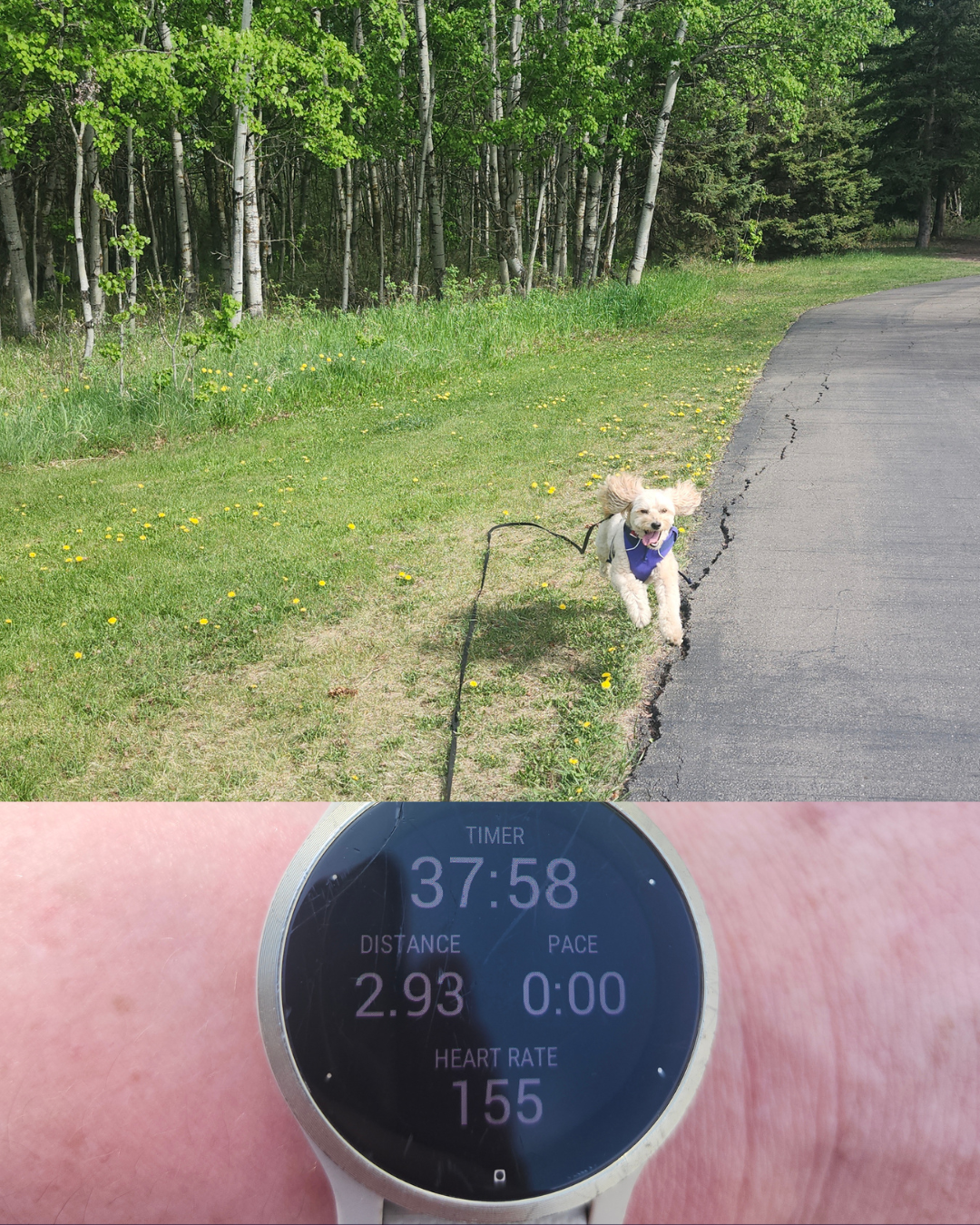
Slowly, things start to shift. I can feel the rapid, thumping rhythm of my heartbeat begin to slow down and ease. I notice my ragged breathing softening, gradually returning to normal. As the physical reactions quiet down, the panic goes away. My brain finally realizes that the hill is just a hill, not a medical catastrophe. Once everything settles, I can keep walking without those sirens blaring in my head.
Learning to manage those false alarms is one thing. But my body also deals with very real, unpredictable emergencies in the present. I get those exact same high-stakes, panicked sensations when I suddenly need to find a toilet immediately. This isn't a temporary flare-up; this is just my daily life with Crohn’s disease. Having a normal, formed bowel movement is a total rarity for me. Most days, it is liquid. Sometimes I have some warning—I know I need to go, but I can make it to a bathroom at my destination.
But then there are the other times. The times when the urgency hits with absolutely zero warning, and the reality is brutal: if I do not find a toilet right this second, I am going to poop my pants. This isn't just a fear - it's happened to me. I've been driving my child to school when that sudden urgency hit out of nowhere. I couldn't make it home, couldn’t make it anywhere. In those moments, my body goes into absolute overdrive. My heart rate climbs, my muscles tense, and a wave of pure panic floods my system because I have almost no control over my own body.
And when you don't make it, you have to deal with the aftermath. Cleaning up your body, cleaning your clothes, cleaning your vehicle. Then comes the hardest part of all: trying to manage the total loss of dignity, the intense embarrassment, and the deep shame that comes with a relentless disease you can't control.
These two experiences create a really frustrating contrast in my body. They both flood my system with adrenaline, but I have to handle them completely differently. On the hill, the danger isn't real right now. The breathless feeling triggers an old panic. The fix is to stop, soften, wait, and let my body realize it’s actually safe in the present moment. With the Crohn's urgency, the danger is happening right now. I can't just pause, take a deep breath, and wait for it to pass. The threat of losing control is immediate, demanding fast action and forcing me to push through an incredibly stressful situation.
The hardest truth to accept about chronic illness and medical trauma is that these alarms are probably never going away completely. My lungs have a history that makes them sensitive to exertion, and my gut is permanently altered by Crohn's. These physical triggers are just a permanent part of my life. This isn't a story about a miraculous recovery, or finding some perfect, unbroken peace. It's just about learning how to live alongside the noise of a body that has been through a lot.
By understanding these different emergencies, I can choose how to treat myself when they happen. I can accept the self-consciousness of breathing heavily on a hill, pause to let my heart slow down, and then keep walking. And I can give myself some grace in the absolute mess of a Crohn's emergency, reminding myself that the shame doesn't belong to me—it belongs to the disease. The alarms are going to ring. But I'm learning how to handle them, step by step.
